
You can now place food waste, food-soiled paper, with your green waste – grass, leaves, and prunings in the organics cart. It's the same material, just being placed a different cart.
This change will help reduce the production of greenhouse gasses that cause climate change and reduce waste going to landfills.
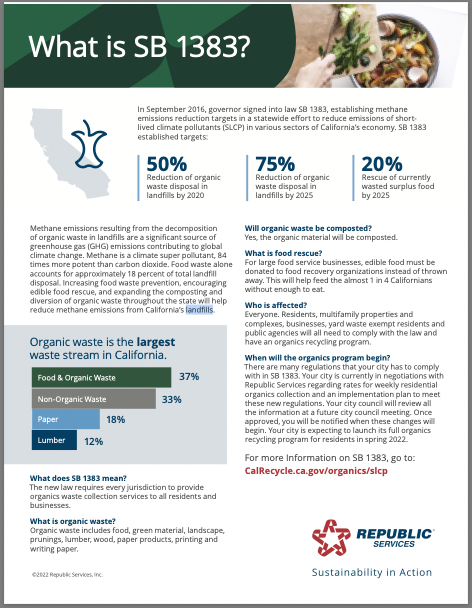
State law requires all of California to separate their organic waste, such as food waste and food soiled paper, from their garbage that would otherwise go to the landfill. Learn more about Senate Bill 1383
What's Organic Waste?
Organic Waste refers to waste that can go in the organics cart including food waste and yard waste.
View acceptable and unacceptable items
Examples:
- Food Waste, Coffee Grounds, Tea Bags
- Food-Soiled Paper Products (Pizza Boxes, Napkins, Coffee Filters)
- Green Waste (Landscape and Pruning, Leaves, Flowers)
- Landscape and Pruning, Leaves, Flowers, Sludge
- Lumber, Wood
Resident Responsibilities
Do your part to keep the City of Elk Grove green. Below are the actionable steps you’ll need to take to comply with new recycling requirements in the City of Elk Grove:
Single-Family and Multi-Family Residences
- Sort food waste and food-soiled paper products separately from trash in your home
- Dispose of food waste and food-soiled paper products in your organic waste cart
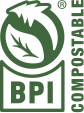
- Bagging organic waste is optional. If you do want to bag organic waste, you must use BPI Certified Compostable bags! Look for the BPI Certified Symbol when shopping
What Goes In The Organics Cart?
Acceptable
Dirty Paper
- Greasy pizza boxes and paper bags
- Paper coffee filters
- Food soiled paper napkins, tissues, and paper towels
Food scraps
- All fruits and vegetables (pits and shells too)
- Coffee grounds
- Dairy products (no liquids)
- Eggshells and eggs
- Leftovers and spoiled food
- Meat (including bones)
- Seafood (including shellfish)
Plants
- House plants
- All plant debris including flowers, leaves, weeds, and branches
- Tree trimmings (less than 6” in diameter and 4’ long)
Other
- Bags labeled “Compostable” only
- Cooking grease: Small amounts can be soaked up with a paper towel and composted.
- Corks (no plastic)
- Plastic clearly labeled “Compostable”
Unacceptable Items
Place these in your Blue Recycling Bin instead:
- Aluminum foil or trays
- Glass bottles and jars
- Metal cans and lids
- Plastic not labeled “Compostable”
- Recyclable/clean cardboard or paper
Place these items in your Black Landfill Bin:
- Composite items made of multiple materials
- Juice, soup, or soy milk type boxes with foil/plastic liner
- Styrofoam meat trays or other dirty Styrofoam
These items don’t belong in your green or blue bins but should still be recycled:
- Batteries: small residential quantities can be recycled
- Cooking oil: take to Special Waste Collection Center
- Electronics: contact Republic Services or take to Special Waste Collection Center
- Hangers: take to your local garment cleaner for reuse
- Plastic bags and film: recycle clean plastic bags at California supermarkets
- Styrofoam: take packing peanuts to local shipping store for reuse
For more in depth information about specific products, please refer to the Republic Services web page.
Organic Recycling in Our Community
Rethinking the System: SB 1383 brings opportunities to support friends, neighbors and businesses
 One of the goals of Senate Bill 1383—California's Short-Lived Climate Pollutant Reduction Strategy—is to reduce the state’s organic waste by 75 percent by 2025. Not only will this greatly reduce methane gas emissions, but edible food recovery programs created to meet the bill’s goals are helping to feed Californians suffering from food insecurity.
Better Habits: Green bins support environmental education and behavior change
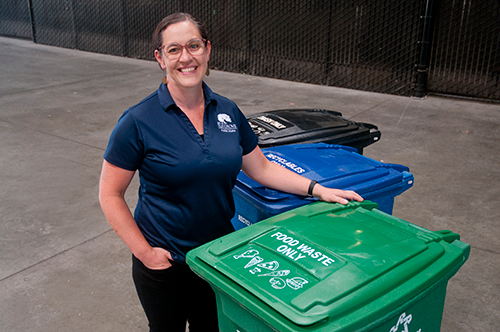 Sometimes a waste bin is more than just a waste bin. The color-coded carts used in Elk Grove—and particularly the green bins—are part of a massive effort to change residents’ behavior and normalize separating food waste from other refuse.
An Ounce of Prevention is Worth a Ton of Cure: Learn how you can reduce food waste on the front end
 “Reduce, reuse, recycle” is a useful and familiar mantra, especially when emphasis is placed on the first goal—waste reduction. Planning ahead to ensure you don’t over-purchase or otherwise generate too much food to begin with can limit the need for reuse and recycling.
Teaching good habits: Middle school educator makes cafeteria conservation cool
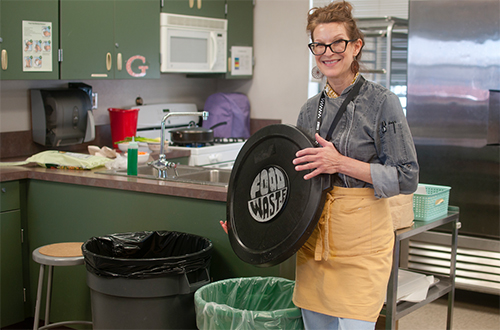 In partnership with the city of Elk Grove, Toby Johnson Middle School participates in an award-winning program—initiated by home economics teacher Kathleen Albiani—that helps students and educators better understand the organic and food waste recycling process. The program also aims to encourage students to share the knowledge and practices they learn with their families.
Food Bank Game Changer: New California law aims to feed the hungry while reducing waste
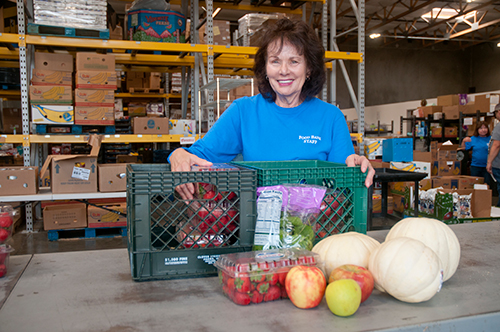 One of SB 1383’s goals is to recover 20 percent of edible food. This effort is already benefiting the Elk Grove Food Bank Services and other food pantries in Sacramento County, which have been struggling to meet the public’s growing need for food assistance.
Change Starts at Home: The city of Elk Grove’s practical plans to reduce residential food waste
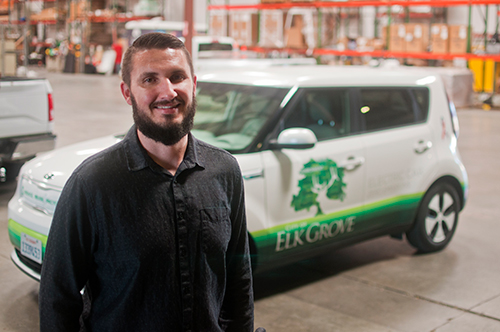 In its implementation of SB 1383 over the past few years, the city of Elk Grove has started several programs to cut back on organic waste and educate the public. This includes providing residents with compost from the Elder Creek Transfer Station and teaching them to make their own through quarterly workshops at the Elk Grove Community Garden.
Farm to Fork and Back Again: Elk Grove restaurant owner is committed to sustainable business practices
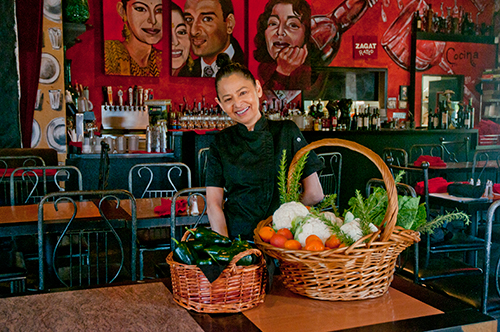 Elk Grove restaurant Todo Un Poco owner Marie Mertz has set a goal of producing zero organic waste, and her efforts include regular visits to a local farm that uses the eatery’s food waste for chicken feed and soil amendments.
Sustainable Solutions: How companies are turning organic waste into marketable products
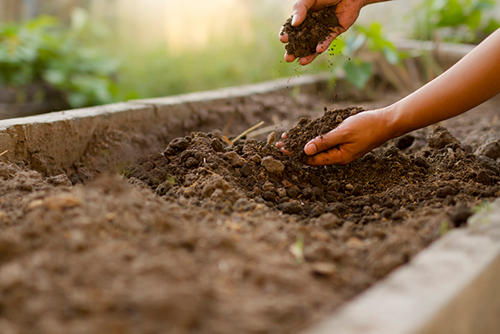 When organic waste is turned into compost, mulches and other products, it can be used to greatly enhance soil health. Even biochar—a byproduct of using lumber and wood waste to create energy—is a carbon-rich, porous material with various benefits for agricultural systems.
Recover and Reuse: Closed loop recycling provides new uses for Elk Grove’s organic waste
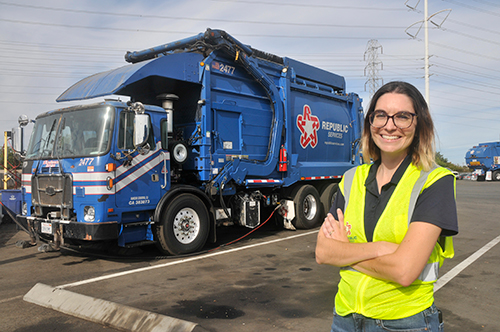 Once Elk Grove residents’ organic waste is collected by Republic Services, it is taken to the Elder Creek Transfer Station and carefully separated. Then, the component parts are turned into nutrient-rich compost, electricity and vehicle fuel. The ultimate goal is “closed-loop” recycling—to turn all that waste into useful, new products.
Small Changes, Big Difference: Residents have the power to combat climate change
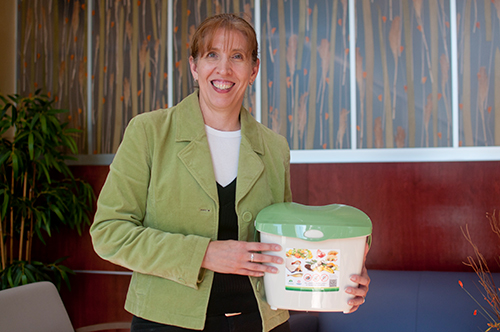 Immediate action on climate change is necessary, and it’s easy for everyone to make a difference by reducing organic waste. Simple lifestyle changes at home—like using a countertop kitchen pail (provided for free at Elk Grove City Hall) for food scraps and disposing its contents to a green waste bin—can go a long way.
Local Action, Global Goals: Organic waste reduction efforts in Elk Grove
 Veteran environmental advocate and compost expert Evan Edgar gives insight into why reducing organic waste at landfills—and the methane it creates—is important. He explains the gas, left unchecked, lingers for 30 years, but can be made into bio-methane fuel for vehicles in 30 days.
Benefits of Organics Recycling
Organic waste is the largest source of waste in landfills and leads to increased emission of methane and other greenhouse gasses. Proper organic waste recycling is an eco-friendly practice that makes a global and local difference. It has a big impact on the health of the environment and our communities.

Reduced Pollution
Composting organic waste instead of sending it to landfills will significantly reduce methane emissions, which contribute to climate change.

Renewable Energy
New state-of-the-art facilities in our state are turning organic waste into renewable natural gas used for transportation fuel, electricity and heating appliances.
Less Landfills
Organic waste currently makes up half of what Californians dump in landfills. Diverting it to composting facilities will extend the life of landfill and minimize the need for more landfills in the future.

Resilient Agriculture
Compost created from organic waste will be applied to crops to enrich our soils and support a resilient food supply.

Combat Food Insecurity
Restaurants are required to donate edible food under Senate Bill 1383. Food donations can play a major role in helping distribute resources to families in our community experiencing food insecurity.
Frequently Asked Questions
What happens to the organic waste after it’s collected from residents and businesses?
The organic waste collected from residents is transferred to a local facility for sorting. From there, it is sent for processing to a California composting facility. Business’s organic waste is collected and transferred to an anaerobic digestion facility to produce renewable natural gas for transportation fuel, electricity, or heating appliances, or to a biomass conversion facility to produce electricity.
Can we use the same plastic bin liner we use for trash?
You aren’t required to bag your organic waste. However, if you’d like to, you may use BPI (Biodegradable Products Institute) Certified compostable bags or paper bags to dispose of your organic waste. Conventional plastic trash bags are not allowed since they cannot be processed at the organics recycling facilities. BPI Certified compostable bags can be found online or at all major retailers, just look for the Certification!
How often is my organic to be picked up?
The Organic Waste Cart will be collected on a weekly basis alongside your Garbage Cart. Your Recycling Cart will remain bi-weekly.
Why are we required to separate organics?
The State of California passed Senate Bill 1383 as a statewide effort to reduce emissions of short-lived climate pollutants and help prevent global climate change. It requires all California residents and businesses to separate their organic waste, including food waste and yard waste, from trash so that it can be recycled rather than disposed of in a landfill. Organic materials such as food waste and paper decompose anaerobically (without oxygen) in a landfill, producing methane—one of the most potent greenhouse gases in Earth’s atmosphere. By separating and recycling our organic waste, Californians will be diverting around 300,000 tons of food waste per year from landfills.
How do I separate my food waste?
The easiest way to recycle your food waste is to keep a bowl or other container close by when cooking. Place all your fruit and vegetable trimmings, peels, stems, meat scraps, eggshells, etc. in the bowl as you go. When you’re done eating, scrape all your unwanted leftovers into the bowl and transfer it all to the organics cart outside. If you prefer to keep a closed kitchen countertop pail in your kitchen, the City is providing free pails while supplies last. The pails are washable and dishwasher safe.
What about the smell? Will this attract pests or bugs?
Remember that this material is already in your trash cart, so no new issues should arise. Your organics cart is collected weekly to minimize the risk of attracting pests or bugs. While not required you can place your food waste in paper bag, napkins, or other compostable paper. While not required, you may use BPI Certified compostable bags to dispose of your organic waste. BPI stands for Biodegradable Products institute. These certified plastic bags can be found online or at all major retailers.
What if I already have a compost bin at home? Can I be excluded from this?
No, unfortunately the state law requires mandatory compliance. On the plus side, there are many waste types that should not go into a home composting bin but can be composted through this program including meat, grains, packaged and processed food, and food-soiled paper such as dirty paper napkins. Whatever you do, remember that food waste no longer belongs in the trash as of July 1, 2022 and that disposing of food waste in the trash may result in Contamination Fees and/or fines.
What if I refuse to separate my food waste?
The state has made these requirements mandatory and the City has been mandated to enforce them. Noncompliance, which includes refusing to recycling your organic waste and/or not placing the correct materials in each cart, could lead to code violations. If the City does not enforce these requirements, the City could be subject to administrative penalties of up to $10,000 per day.
Contact
Residential Organics Recycling Questions
Brandon Colldeweih
Residential Service
(916) 687-3060
Email